If forcing Catholic hospitals to pay for "morally offensive" birth control is wrong, why is forcing me to pay for bombs and bullets, bombs and bullets that my religion holds are moral abominations, just fine and dandy?
- Badtux the Friendly Penguin

If forcing Catholic hospitals to pay for "morally offensive" birth control is wrong, why is forcing me to pay for bombs and bullets, bombs and bullets that my religion holds are moral abominations, just fine and dandy?
- Badtux the Friendly Penguin
On October 19, 1781, General Cornwallis surrendered to the combined forces of George Washington and the Comte de Rochambeau at Yorktown, Virginia, thus ending the armed warfare period of the American War of Secession. The British Army still had over 100,000 troops in North America and still held New York City, but effectively the war was over.
So the question is, *why* was the war over, if the British still had more than three times as many men on American soil as Washington and Rochambeau combined? The answer is simple: The British Crown had been bankrupted by a Parliament that was run by the same sort of anti-tax people as the Teabaggers, who had refused to raise taxes to pay for the expensive wars the United Kingdom had fought over the past thirty years thus forcing the Crown to borrow more and more money to cover those costs, until the Crown finally arrived at the point where the bankers said "No more!" and refused to loan more money because the Crown wasn't even able to make the interest on the loans.
The net result was that yes, there were over 100,000 British soldiers in North America, but they were half-starved due to the massive expense of provisioning them across a vast ocean and hadn't been paid in months, and thus were useless for purposes of waging war. The vast expense of outfitting the Cornwallis expedition had pretty much been the last gasp of the Royal Treasury. The Crown was bankrupt, pure and simple. Which, after all, had been the original cause of the war -- the Crown had attempted to raise taxes on the colonials to repay their debts because they didn't need permission of Parliament to do that, and the colonists balked at paying taxes that the British public didn't have to pay. Sort of like our 99%'ers are currently protesting in the streets because they pay a higher effective tax rate than the 1% multi-millionaires (remember, the majority of multi-millionaires do *not* pay income tax at 28%+, they pay capital gains tax at 15% due to the way they structure their compensation to evade income taxes... and they do *not* have 7.85%*2 taken out of those paychecks for SSI/Medicare either, it's a flat 15%).
So anyhow, the biggest difference between us now and the British Crown then is that we're not on the gold standard, and can thus just *print* money, which will cause inflation (in China) but means it's effectively impossible to default on our debt. Still, it shows that waging expensive foreign wars without raising taxes to pay for those wars is a loser's game in the end, otherwise our national anthem would be "God Save The Queen" rather than "The Star Spangled Banner".
-- Badtux the History Penguin
Taxes are the price we pay for civilization.
-- Badtux the Shorter Penguin
Funny how an entire long diatribe of mine can be summarized in one sentence, eh?
It's been the case since about 2003 that more people leave California than come to California from other states. The crash of the dot-com bubble explains 2003, but what about since then?
Demographers say that the primary problem is high cost of living, the most important of which is the high cost of housing. It's not taxes, because if the problem was taxes, the wealthy (who stand to gain more by moving to lower-tax states) would exit the state at a higher rate than the poor. The opposite is true -- 1.73% of California's poor outmigrate, while only 1.09% of California's wealthy outmigrate. Furthermore a smaller percentage of the wealthy who do outmigrate go to low-tax states as compared to the poor. In short, the data simply does not support the supposition that taxes cause the majority of the outmigration, because if the problem was taxes, the rich (who do pay more money as taxes) would outmigrate to low-tax states in higher numbers than the poor do.
So why does California have higher housing prices? Part of that is the market distortions caused by Proposition 13, which provides a disincentive to buy and sell when your family's needs change (due to a new kid, or the kids leaving home), since you'll pay higher taxes on your new (smaller or larger) home than you paid on your old (grandfathered) home. This results in fewer homes on the market, and thus higher housing prices than would otherwise exist.
Still, that cannot explain the full reason for high housing prices, because the Central Valley of California has significantly lower housing prices than the coastal job centers, and has traditionally been perhaps 10% more expensive than the rest of the country. Yet housing prices in the San Francisco Bay area are often as much as three times more expensive than the rest of the country. The 2010 median home price in the U.S. was $168,000, while the 2010 median for the California Bay Area was $375,000 (Source: U.S. Association of Realtors) -- 2.23 times the national average. What gives?
Well, it's like this: The wealthy individuals who create new companies in California prefer to live in the milder climate and nicer scenery of the coastal areas rather than in the blazingly hot desert that is summer weather in the Central Valley. The core problem we run into then is geography. There are only three large areas of coast in California that can be developed -- the San Francisco Bay area, the Los Angeles / Orange County area, and the San Diego area -- the rest of the coast is mountains with only small flat areas such as around Monterrey Bay that cannot support a large population. And all three of these areas are largely built out -- in Contra Costa County, for example, every flat area of land with the exception of some salt ponds along the coast are built out. The salt ponds are below sea level, which means that homes cannot be built there without being built upon expensive landfill with expensive foundations that have stilts down to firmer soil, which basically restricts these salt ponds to commercial development or to parkland. As for the notion that "most of Contra Costa is zoned for greenbelts", well, yes -- but the greenbelt areas are the coastal mountains which are largely unbuildable due to the San Andreas Fault, landslides caused by all the faulting (since the underlying rock has been fractured by centuries of earthquakes and will slide if you breathe hard on it), and simple steepness of the geography, which makes it extremely expensive to build anything in these areas. Thus as landowners moved away from ranching, they've sold or donated their property to the state or county for preservation as natural areas.
In other words, supply and demand says that housing in the three coastal metropolitan areas will always be more expensive than in most of the nation because a) that's where the jobs are due to the decision makers preferring to live in those areas, and b) thus there will typically be more people who want to live there than there are houses for them. What that means is that during times of a growing economy when these three areas are adding jobs, there will be net inmigration. When the economy is stagnant or declining, there will be net outmigration as people lose their jobs and are forced to return back home to their low-living-expense states. And in fact the data appears to support that. The San Francisco Bay area has experienced net job loss in the lower income job categories over the past ten years. And it's primarily the lower income people who've left for lower-expense areas.
And at this point I'm drowning in data, so I'll let you go. But the salient point is this: High taxes are *not* a cause of people leaving California. Rather, high living expenses -- primarily driven by the cost of housing -- is the major cause of outmigration from California. Anybody who tells you high taxes are causing the loss is saying that based on ideology, because the facts simply do not support such a statement. But then, I keep forgetting, the facts have a liberal bias :).
-- Badtux the Reality-based Penguin
And now here go the libertards again, claiming that "businesses are fleeing California due to high taxes". Err.... no. We have two separate studies on this over the past ten years. Businesses aren't fleeing California for *any* reason, taxes or no. The the vast majority of businesses closing shop in California are doing so due to bankruptcy, not taxes. Furthermore, 40% of new venture-funded companies are in California -- California is still by far the preferred state to start a new company in. F
Furthermore, California's tax rates for corporations and the wealthy aren't even that onerous, due to California's generally non-progressive tax scheme. From a standpoint of the wealthy, the top 1% pay only 7.4% of their income as state and local taxes (the bottom pays 20% pays 10.2% of their income as taxes), which is pretty much middle of the pack (look through the data in that paper and you'll see that the top 1% pays on average around 7% of their income as state and local taxes of all sorts). California's statutory corporate income tax rate of 8.84% also isn't out of the ordinary, being somewhat in the middle of the pack (still looking for effective tax rate, but given that California gives billions in tax breaks to corporations (whether it's the bogus "enterprise zones" or "pay taxes only on sales within California" break), it'll be somewhat lower. As I previously pointed out, corporate property taxes have been shifted to individuals due to various tax shelters available with Proposition 13 (the "partnership" shelter being the big one -- by leasing your building from a "partnership" which has held ownership of it since initial construction, you lock in your property taxes at its initial construction rate). The end result of all this is that California does have high taxes -- if you're in the bottom 20% of taxpayers. For everything else, California's in the middle of the pack.
So there's the facts. There's no evidence that a) California has high taxes on corporations or the rich, or that b) high taxes are causing corporations or the rich to flee California. Indeed, the evidence explicitly contradicts both assertions. Yet the zombie lies still get repeated time after time by zombie liars.... it is to laugh, if it wasn't for the fact that they're so effective at catapaulting their propaganda lies via repitition after repetition, until the majority think their lies are true.
-- Badtux the Fact-based Penguin
That is a question that Andrew Sullivan asks. And the answer is... no. And yes.
I got to see how charter schools work first-hand when I lived in Arizona. Basically in Arizona if you can afford to hire a certified principal (or are a teacher willing to take the courses for administrator certification) and have a pulse, you can start a charter school. The only regulation is that you a) accurately tell the state how many pupils you have so they send you the right per-pupil monies, and b) actually spend that money educating kids, rather than embezzling it for yourself.
So did it work? The answer is... well, mixed. The horrible things the liberal doomsayers said about charter schools didn't happen -- charter schools did not become modern "segregation academies" for white children, charter schools didn't cherry-pick only the best students and leave the worst for the public schools, etc., what happened was that a lot of teachers of "at-risk" children decided that they could do a better job outside the public schools and started charter schools focused specifically at kids at the lower end of the scale, so there was a wide variety of charter schools formed, not just the segregated academies. The doomsayers also said that charter schools would suck money out of the public schools. That happened, but because the charter schools get less per-pupil monies than the public schools, it turned out that the money taken away was less than what it would have taken to educate the kid in the public schools. Given that the public schools in Arizona were overcrowded because growth had outpaced school construction for years, the net effect was minimal on public school budgets -- they just let the lease lapse on some of their temporary classrooms and the normal turnover of teachers handled the rest.
The problem is, few of the great things that advocates of charter schools promised happened, either. Charter schools in Arizona, on the whole, turn out to educate children no better than the public schools did. And while there were thoughts that large educational companies would come in and start for-profit charter schools even though Arizona has one of the lowest per-pupil funding ratios in the nation and charter schools get even less than that, because "private enterprise is more efficient than public", that turned out to not be true. A couple tested the water, couldn't make money on the per-pupil funding provided by Arizona, and closed up shop in Arizona within a couple of years.
So why didn't charter schools provide a better education in Arizona? Part of the problem is churn. Charter schools proved very prone to "founder burnout". Charter schools were largely formed by master teachers who wanted to teach a specific group of children (say, homeless kids). Handling all the aspects of running a charter school *and* teaching simply sucked the life out of them over the years, and after they burned out and went back to teaching in public schools, the charter schools they founded largely fell apart and disintegrated by the end of the next school year. A bigger part of the problem, however, is institutional. Charter schools don't have the institutional memory of public schools. That's the point, that they would be able to do things better because they were starting out fresh and new without all that baggage. But it turns out that the institutional memory of public schools is important. Those teachers who've been there 28 years turn out to have something to contribute after all, not to mention the decades of textbooks, teaching materials, lab equipment, classroom buildings, sports facilities, etc. that public schools have accumulated over the years. All of which turn out to be more important than public school detractors thought.
The experience issue is especially important here. A teacher with a lot of experience in the public schools is not going to leave for a charter school because he or she is putting in the years for retirement. That means most charter schools are going to be staffed with new teachers either fresh out of college or only a few years on the job. But I'll tell you a secret that's not really a secret: Most new teachers suck. I know. I was one, once. New teachers go into the classrooms and haven't a clue as to how to teach. Our schools of education don't have a clue as to how to teach teachers to teach, and most of a teacher's training in how to manage kids and get kids to understand material happens on the job as he or she tests various techniques and finds out, after a number of years pass, what works based on his personality and the abilities of the children he's teaching. We have studies on this -- basically if you look at student achievement gains and adjust for the socio-economic status of the students, on average experienced teachers simply show more gains than inexperienced teachers.
But by their nature charter schools are churn. The chance of any specific charter school being there 30 years from now is basically nil. The founders will get tired and fold up the school, or it'll lose its lease on its building and fold, or so forth. So at least in Arizona, they're being used by young teachers as their "tryouts" for better public school districts than the one they got a job with just out of college. Sick of teaching inner city kids in South Phoenix? Want to teach rich kids in North Scottsdale but you don't have the years yet to do that? Well, a charter school might just be the place for you!
So what *is* the solution for inner city schools? Well, they have to be institutional changes in how schooling is organized there, which is why charter schools have failed to do any better there -- charter schools have no institutional memory and thus by their nature cannot foster institutional changes. Furthermore, any changes will take *money*. Poor kids come to school lacking a lot of the background of rich kids. The culture shock of being a poor kid in a rich school was pretty dramatic on my part, here's these kids talking about their vacation to Aruba and their psychiatrists and stuff, while in our neighborhood vacation was piling the kids in the rusty third-hand station wagon and taking them to visit relatives who lived 50 miles away and psychiatric help was a belt across the mouth and a "quit talking crazy, fool". We can't take poor kids to Aruba to give them the same experiences as rich kids, but we definitely need to widen their horizons beyond the circumscribed world of no money that they live in.
But in the end, any such changes aren't going to happen as long as the United States continues its current war on the poor. Which means, if you were born to a poor family today, tough luck, kid. You're going to be spat upon, kicked, and treated like shit for the rest of your life, so just get used to it. I was lucky to be part of the last generation of poor kids to come up before Reaganism got a full hold on things, I got an education courtesy of Uncle Sam and the taxpayers and as a result now pay a large amount of taxes every year that I don't mind paying because if it wasn't for other people paying their taxes, I wouldn't be in a position to pay taxes. But the poor kids coming up today... they don't get that. They instead get the opportunity for permanent debt bondage with "student loans", which are actually slavery contracts today because they are non-dischargeable in bankruptcy and the banks and government tack on fees forever that make them unpayable if you are currently unable to pay. And poor kids might be poor, but that doesn't make them stupid enough to sign slavery contracts in large numbers... which means they stay poor, which means the U.S. stays poorer because poor kids as smart as me choose other professions like, say, drug dealer, instead, and we're all the worse for it. But hey, kicking the poor when they're down and making sure that not one dime of white people's money goes to them is more important than a strong United States where all smart kids, rich and poor, have a chance at the education needed to contribute to the nation's economy, so...
WASF. And if you're poor, you're doubly-fucked. And we're all the poorer for it.
-- Badtux the Education Penguin
A fond welcome to a new Communist magazine, comrades! This Communist magazine did a survey and found that 70% of those polled supported higher taxes on Wall Street, especially higher taxes on bonuses for executives of bailed-out firms. Clearly this magazine only surveyed fellow Communists, not good upstanding capitalist Americans, who surely would never support higher taxes on the rich because, well, that's Communist, right, comrade?
Oh, the name of this new Communist publication? Urm... Bloomberg News. And the people surveyed were a statistically random sample of Americans.
Hmm... by the definition of the Weeper of the House (Boehner) and the Weeper of the Tube (Glenn Beck), that makes 70% of Americans... COMMUNISTS? Welcome, comrades! Let us build a worker's paradise here in Soviet America, da?
-- Badtux the Snarky Penguin
As Republicans are fond of pointing out, lower taxes means more revenue for government, so this nation, which taxes less than 2% of its population, must have a bajillion dollar budget for everything from health care to its military. Since taxes are what keeps businesses from thriving, this nation must be a bustling paradise of commerce, so wealthy that its streets are paved with gold, and Americans must be clamoring to emigrate there looking for a better life, while employers beg the government to let more workers in because the economy is booming so fast that every citizen is employed. This nation is... uhm.... Pakistan.
Uhm, which, I might point out, is not a paradise. As in, the vast majority of the citizenry lives in abject poverty, misery, and ignorance, in a situation so bad that even the Taliban look good by comparison. As a result, the nation is wracked with violence. The money-starved government, starved of resources by low taxes, cannot afford to pay its employees, so corruption is a major problem as the only people who will go to work for the government are those willing to get their pay another way -- i.e., via corruption. Unemployment is over 14% and underemployment is probably double that. The educational system is so impoverished that the majority of classrooms lack textbooks and qualified teachers. And rather than educated people flocking to Pakistan to make their fortunes, the flow is actually going the other way -- educated Pakistanis fleeing the corruption and violence do everything in their power to emigrate to Britain, Australia, or Canada to get away from the horror of daily life in Pakistan.
But I forget, if we do to our government what the Pakistanis did to theirs, we won't have the same result. Even though every other country (Mexico, anybody) that has tried the cut-taxes-to-get-economic-growth thingy has gotten the same results as Pakistan, why, this time will be different, because... because... look! Unicorns! And cotton candy trees! Alrighty, then!
-- Badtux the Snarky Penguin
EBM points out that governments are turning to higher and higher traffic fines/fees to pay for basic services because of the refusal of the general public to raise taxes on themselves to pay for the services they demand from their government. What, you say there is no free lunch, that if we want to have government services we must pay for them? Heresy, heresy I say! Don't tax you, don't tax me, tax that suspicious looking feller over there behind that tree! Oh wait, no, that feller happens to own most of the politicians in town, so we can't do that, can we? Heh.
At which point the tighty righty interjects,
Here's a thought. How about we cut some spending.
Sure! So what spending do you want to cut? Spending on regulators for gulf drilling? Yeah, that worked out well. Spending for defense? Your ilk shits your tighty whities every time we suggest that, even though defense is over 50% of the federal government's discretionary budget when you add in the war spending. Spending for unemployment insurance? Uhm, these folks paid into the unemployment insurance fund for all their working lives with the promise that if they needed it, they'd get unemployment compensation while they looked for a job, your ilk sure likes breaking your promises. Shall we cut spending for children's health care insurance and watch children die? Well yeah, I know that gives tighty whities like, the biggest erections of all time, they just stroke their rods at the thought, tighty righties just *love* the thought of people dying (preferably brown people, but they'll stroke to children dying too, but *never* fetuses, fetuses are God's special little ugly monkeys).... oh I know! We'll cut Medicare! Those wrinkly old prunes ought to just have the sense to die when they get sick like they used to back before Medicare! (50% of our elders had no health insurance before Medicare was passed, and basically no access to health care if they got sick).
Or cops! We don't need police departments anyhow, because you, a pasty-ass soft white cubicle dweller, are perfectly capable of taking on vicious criminals with that .22 caliber pistol in your dresser drawer that you've never, ever fired but hey, the people on Westerns manage to do it, so how hard can it be? And fire departments, let's cut fire departments, because after all, if your house catches on fire you should have just installed a fire sprinkler system that would have put it out so if it burns down it's your own darn fault, right?! Too bad about your *neighbor's* house that burned down because there was no fire department to keep pumping water on its roof to keep the embers from your house from catching it on fire...
Or maybe... just maybe... being the OECD nation with the lowest taxes of all major economies isn't a healthy place to be? I mean, fuck. Even SOUTH KOREA and JAPAN have a higher percentage of their GDP going to taxes than the United States! How fucked up is that?!
- Badtux the Snarky Penguin
Not quite... the average American paid only 9.2% of his income in taxes last year. That's *all* taxes -- sales, income, state, local, the works. And it's not just because income has fallen, taxes have fallen even faster than incomes. As you'd expect, with a somewhat-progressive tax code that gives a break to people lower on the income scale, but the huge tax cuts passed by the Obama administration have a part to play in that too.
I expect to hear right-wing zealots praise the Obama administration's tax cuts... uhm... never?
In the meantime, based on this data it's clear what the solution to the deficit is: Raise taxes. We have the lowest real tax rates since 1950, and lower taxes overall than every other major economy on the planet. But raise taxes on who? Not you, not me, that guy behind the tree over there, surely. But who is that guy behind the tree? Wait, is there even a tree? Hmm....
-- Badtux the Snarky Penguin
California business leaders agree: The state's school system is in a free-fall collapse caused by a collapse of school funding over the past forty years since Proposition 13 was passed. Their solution: Raise taxes. Raise taxes on other people, that is. Not on them.
At which point the ordinary folks of California, who've seen their percentage of the property tax burden rise from 50% of property tax collections to 80% of property tax collections over the past forty years since Prop 13 was passed, say "Nyet! Don't tax me, tax that other guy!". The guy behind the tree, presumably. Who *isn't* business. Who *isn't* an ordinary residential homeowner.
The problem is, who is that guy behind the tree? Nobody will point him out. Baffling, eh? But the game of "yes, we need taxes to fund education, but don't tax you, don't tax me, tax that guy behind the tree" continues, as California's school systems crumble under the weight of inadequate funding...
-- Badtux the Taxing Penguin
So, taxes on businesses can't be increased because it hurts employment? And the experience of California, where businesses are fleeing the state in droves due to high taxes, shows what happens if you increase taxes on businesses? Uhm, it actually turns out to be a myth that businesses are fleeing California in droves, whether because of "high state taxes" or otherwise. Furthermore, as a percentage of state GDP, California business taxes are actually BELOW AVERAGE, ranking 39th amongst all states in business taxes as a percentage of GDP.
I recall a survey, which is probably findable by a Google search (please try it yourself and let me know what you find), that polled businesses that either left California or expanded somewhere other than California in the past ten years. This poll found that real estate prices and an expensive workforce, not taxes, were overwhelmingly the reason they left or expanded elsewhere. It makes sense when you consider that state and local taxes account for only around 1% of the cost of doing business in California.
In short: Right wingers, please quit repeating long-discredited talking points with no basis in fact. Thank you!
- Badtux the Snarky Penguin
Who really doesn't expect right-wingers to take his advice, since they are soooo addicted to their talking points!
"Government should live within its means!"
Well, yes. But there's two ways to do this -- reducing expenses, and increasing income.
In the early 1970's, the economy in the town we lived in took a dive. Major industries left and were not replaced. When one major employer near my father's shop left, he lost over 200 customers. Our family economized as much as possible, but we weren't exactly living a lavish lifestyle to begin with -- our television, for example, was a 19" black-and-white hand-me-down from our grandparents -- so it wasn't as if there was a whole lot that could be cut without cutting into basic services such as food, clothing, water, and electricity.
So, here's the deal: Did he say, "oops, we only have enough money to buy food for two people, you kids are on your own, go scrounge some food out of garbage dumpsters"? Did he say, "oops, we don't have enough money for electricity and water and sewer, you kids are going to just have to freeze in the dark and go to the neighbor's to get water, and take baths while shivering in water hauled from the neighbor's outside faucet in buckets"? Uhm, no. He went out and got more income so we could continue eating. He spent a few dollars on advertising, but when that didn't bring in enough money, he took on a second job -- he increased his income. He might have been tired after he got home late at night from his second job, but we had food and water and electricity.
The notion that he should have just said, "oh well, we only have enough food for four days a week? Guess we'll just starve three days" would have had him slapping you upside the face (he was a fiery little Cajun dude and had a temper), because failing to provide for his family's basic needs that way would have offended him on a fundamental basis. Yet the anti-tax cretins regularly use the same rhetoric to justify government cutting basic services... "government must live within its means!" Well yeah, you cut what you can, but when you're down to the fundamentals of what government is supposed to be doing -- things like transportation, public safety, etc. -- there comes a time when you have to say, "f**k it, it's time to dig in and take a second job to increase our income." Whether a family has 4 people in it like ours did growing up, or 36,000,000 people in it like the State of California, the point remains the same -- when times are hard, you not only cut your expenses as far as possible, but you also increase your income as much as is necessary to keep the lights on and food in your children's mouths and pay for health insurance for your children. It's called, like, manning up. Duh. Not that the tighty righties who shit their pants over the notion of mean darkies would know what being a man is all about anyhow, they're too busy cringing in terror of anybody who's a different color from them to know what being a man is all about...
-- Badtux the Budget Penguin
"Tax cuts" to the wealthy spur investment only in Treasury bonds. There is no free lunch. The money to operate government has to come from somewhere. It either comes from taxes, or it comes from taxes + treasury bonds. Either way, the same amount of money is taken out of the economy to fund government. The difference is that the upper classes get interest (a redistribution of income from all taxpayers) on the t-bills, which obviously they prefer but which is less than ideal in that it redistributes some money from the lower classes to the upper classes.
The way to spur the economy is to increase consumption, not investment. There is already sufficient investment capital, and if there isn't, we can put the government in the business of providing investment capital the way they've done with the banks. Now, if rich people get more money, they don't consume. They invest. They're already consuming everything they want to consume. But if a poor man gets more money, he'll go out and buy something that he wants or needs, new clothes, a new car, whatever. This will in turn spur more retail and manufacturing jobs.
So as you can see, tax cuts work to spur the economy only when targetted at the lower classes. "Spreading the wealth" as Obama put it is just good economic sense, even for the upper classes, because it increases the demand for products produced by the companies owned by the upper classes and thus increases their incomes and profits. As for whether tax cuts for the lower classes should be funded by increasing taxes on the upper classes or by selling t-bills, both pull money from the upper classes. But selling t-bills means some tax money from the lower classes gets funneled *back* to the upper classes as interest payments on the t-bills. That sort of defeats the whole purpose of the tax cut. So Obama's proposal to allow the tax rate on the upper classes to rise back to its original 39% rate is just plain smart.
Of course, that's also why it is controversial amongst those who decry it as "socialist". Because "smart" and "Republican" in the same sentence? Uhm, no. As for the notion that a tax rate of 39% will stop wealthy people from investing or make them work less hard, uhm, that is what the tax rate was during the Clinton years. Funny, the Clinton years sure seemed more prosperous than now, hmm?
-- Badtux the Economics Penguin
Taxes are the price we pay for civilization.
-- Oliver Wendell Holmes
In this world nothing is certain but death and taxes.
-- Benjamin Franklin
Yes, the state taxes are in the mail, and the U.S. taxes are e-filed. As usual, pretty close to $0 balance on both, getting a little back from Feds, sending a little to the State.
As a member of the last generation of poor kids who got a free college education from Uncle Sam (a program gutted by Reagan and Bush I, and never restored by Clinton I and certainly not restored by Bush II), I have absolutely no problem with paying taxes. It feels more like paying back a loan from society than an imposition. If it wasn't for the investment that Uncle Sam made in me, I wouldn't be paying any money to Uncle Sam because I'd be just another loser bum like my relatives who didn't go to college. I just feel sad that today's poor kids won't get the opportunity for higher education that I got...
-- Badtux the Well-taxed Penguin
Taxes are the price we pay for civilization.
-- Badtux the Shorter Penguin
Funny how an entire long diatribe of mine can be summarized in one sentence, eh?
Okay, back to Econ 101 again. As you may recall from my earlier posting on gold, the value of money is what you can buy with it. Gold was lousy as money because you can't buy shit with gold. Try it. Go down to your local store. Pick up a bag of potatoes and a bag of turnips, and go to the checkout counter. Give them gold. See them stare at it in amazement, then tell you, "I want real money." I.e., the green pieces of toilet paper with pictures of dead Presidents.
The value of any money, whether it's the green toilet paper or not, rests solely in what people will give you in exchange for it. Remember, the basis of an economy is the amount of goods and services in circulation, not the amount of green toilet paper in circulation. The wealth of a nation is the amount of goods and services in circulation, not the amount of green toilet paper in circulation. You want the amount of green toilet paper in circulation to pretty much match up with the amount of goods and services in circulation, otherwise you get deflation (good for rich people, bad for working people) or inflation (good for working people with no savings, bad for everybody else), other than that the amount of green toilet paper in circulation is irrelevant.
Okay, so Bush "gives" you a tax cut (actually, just pushes a tax hike into the future, since the money for the "cut" was borrowed). Are you really better off now? Well, you have more green toilet paper in your wallet. So the next question is, are there more goods and services in the economy for you to buy? Are you actually any better off?
The answer to that last question is "no." The amount of money in your pocket will buy exactly the same share of that goods and services as it did previously. You are no better off than you were before the tax cut because the money in your pocket will buy you the same amount of "stuff" as before the tax cut. All that happened was that inflation happened -- more money chasing the same amount of goods available for purchase means that the goods get more expensive, and you're no better off.
Now, if the government was actually cutting its spending on destructive activities -- taking fewer goods and services out of circulation and literally blowing them up and shooting them out of the barrel of a gun -- then there would be more goods and services in circulation in the economy, and a tax cut would be warranted so that the amount of money in circulation would match the amount of goods and services in circulation. But as we all know now, the Bush Administration has been spending like a drunken sailor, and mostly doing that spending in none-productive ways that do not provide goods and services to our economy (i.e. that do not create roads, bridges, provide police services, etc.), and so the government is actually taking more goods and services out of the economy and using them to blow up some god-forsaken desert that nobody gives a shit about anymore (except the people who live in that god-forsaken desert, of course, who are somewhat pissed and doing their best to get us to spend ourselves to economic exhaustion so that we'll quit blowing up their god-forsaken desert and go do something more productive). More green toilet paper, fewer goods and services, is it any wonder that the prices of food, housing, and fuel have been going through the roof?
Now, the next question is, "do tax hikes really take money out of the economy?"
Well, it depends on two things: 1) the extent of the tax hike, and 2) whether the tax hike is being used for some purpose that adds to the economy. For example, right now 15% of the U.S. economy is going to medical care. By imposing a 7.5% Medicare tax upon all payrolls and extending Medicare to all Americans, that percentage of the economy could be reduced to 10%, and the remaining 5% no longer going to insurance companies for non-productive purposes would then be additional goods and services available to the economy. So you'd actually be able to buy more "stuff" with the amount of money remaining in your pocketbook.
If the tax hike was gigantic enough to reduce the incentive to work (but we're nowhere near that -- the amount of our GDP going to taxes is under 30%, and you have to get above 50% before people start losing incentive to work for a living), or if the taxes were going to non-productive purposes such as being shot out of a gun or blown up, on the other hand, you'd be out the money but there would be no more (or fewer) goods and services in the economy. So you'd be worse off. So the answer is "it depends". But as long as you keep your eye on the ball -- the goods and services circulating in the economy, not the green pieces of toilet paper -- you're well positioned to be able to judge for yourself whether a particular tax cut or tax hike actually puts buying power in your pocket. And in the case of extending Medicare to all Americans via a Medicare payroll tax, it most definitely does put money in your pocket, because you get more services for the money taken out as taxes for half the price of buying it on the open market (where you don't have the economies of scale that the government has).
-- Badtux the Tax Penguin
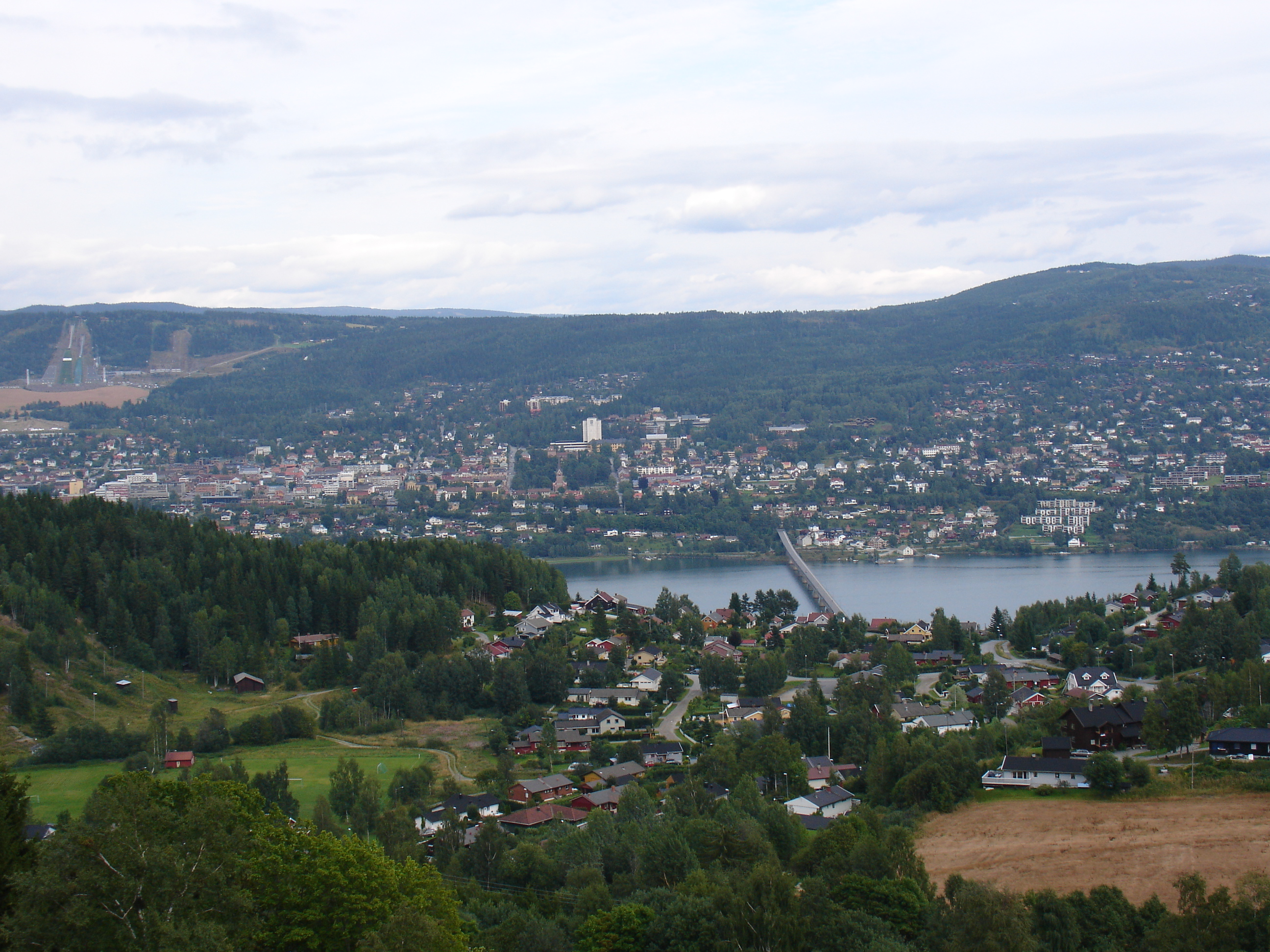
I mean, they got that socialist medicine thingy going. They got those high taxes and stuff. They probably live in grey dreary cities, eating mush for supper, in impoverished dreary nations where everybody is poor and stuff, right?
Errr... not so much. Turns out that one in 85 Norwegians is a millionaire, as vs. 1 in 125 Americans. *AND* they get free health care. *AND* they get free university tuition. *AND* they have the world's best infant mortality figures. *AND* they have the world's longest lifespan. And their cities are beautiful. And income inequality is relatively low -- with living wage laws and high taxes, the middle class actually control more of the national income than the upper class, and unlike here in the United States, the middle class is seeing their standard of living improve, not decline. Wow, imagine that, what a remarkable thing that must be!
Crap, if that's what socialized medicine and high taxes do for a people, gimme some of dat!
-- Badtux the neo-Scandinavian Penguin